
Stepping Away From Words, Into Music
In mental health work, we spend most of our days holding space for others.
We listen closely. We think carefully. We respond intentionally.
What we don't always have space for is slowing down together as a team — not to plan, not to problem-solve, but simply to experience.
Recently, our team participated in a facilitated experiential session led by Becky, integrating guided music listening, sensory awareness, imagination, and expressive drawing. The intention was not training in technique, but shared reflection and embodied awareness.
It became something much more meaningful.
🎵
🎵
Moving From Doing to Experiencing
Therapists are highly verbal professionals. Our work depends on language formulation, reflection, interpretation, and documentation.
This session invited us to step outside of that familiar mode.
Through guided sensory awareness, we were asked to notice breath, bodily sensations, emotional tone, and subtle internal shifts while listening to music. Rather than analysing, we practised observing. Rather than interpreting, we allowed.
“For a team accustomed to cognitive engagement, this shift into embodied experience was grounding — and humbling.”
The Power of Shared Inner Experience
As imagery emerged during the music, each team member's internal world unfolded differently. Some experienced colours or movement; others noticed memories or emotional textures.
What stood out was not the content itself, but the diversity of inner landscapes within a group that works closely together every day.
The subsequent drawing and group reflection allowed us to witness each other in a new way — not as colleagues, but as individuals with rich and nuanced internal worlds.
In a profession centred on attunement, it was powerful to practise attuning to one another.
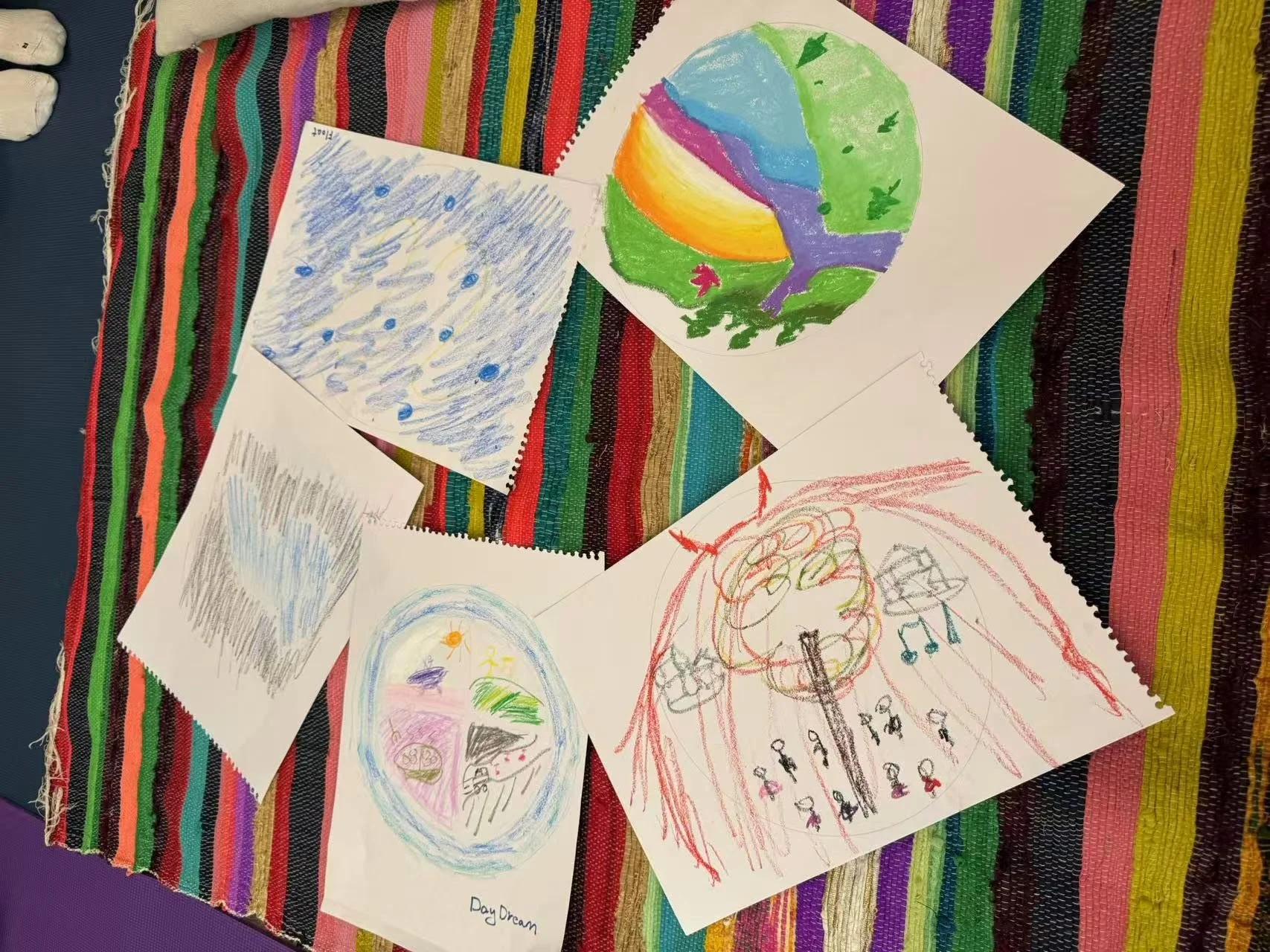
Stepping away from words, we listened, felt, and let images emerge: each drawing a quiet glimpse into the inner worlds we don’t often pause to share.
Why Team Experiences Like This Matter
In clinical environments, burnout does not usually come from lack of skill — it comes from emotional load and sustained responsibility.
Experiential team sessions like this can:
Support nervous system regulation
Strengthen relational trust within the team
Encourage reflective capacity beyond cognitive discussion
Remind clinicians of the importance of embodiment in their own well-being
Importantly, this was not a debrief, supervision, or strategy meeting. It was space to pause. And pause is often what high-functioning teams forget to give themselves.
A Culture of Reflection
At our practice, we value professional development — but we also value emotional sustainability.
Creating space for shared experiential work reinforces the culture we aim to cultivate: thoughtful, grounded, and human.
Before we are practitioners, we are people.
We are grateful to Becky for facilitating this experience with steadiness and care, and for reminding us that the work we do for others begins with the care we offer ourselves.
