
🌱How to Find the Right Therapist for Your Child
When parents look for a psychologist for their child, the first questions are often:
"How experienced are they? How many years have they been practicing?"
Working with children and adolescents is fundamentally different from working with adults. It requires not only training, but a different mindset, skillset, and presence.

Less Interpreting, More Playing🪀
Adult therapy relies heavily on verbal reflection, insight, and cognitive processing. Children, however, communicate differently. Their emotional language is still developing. Their inner world is often expressed through behaviour, imagination, movement, and play.
“It is in playing and only in playing that the individual child is able to be creative and to use the whole personality.”
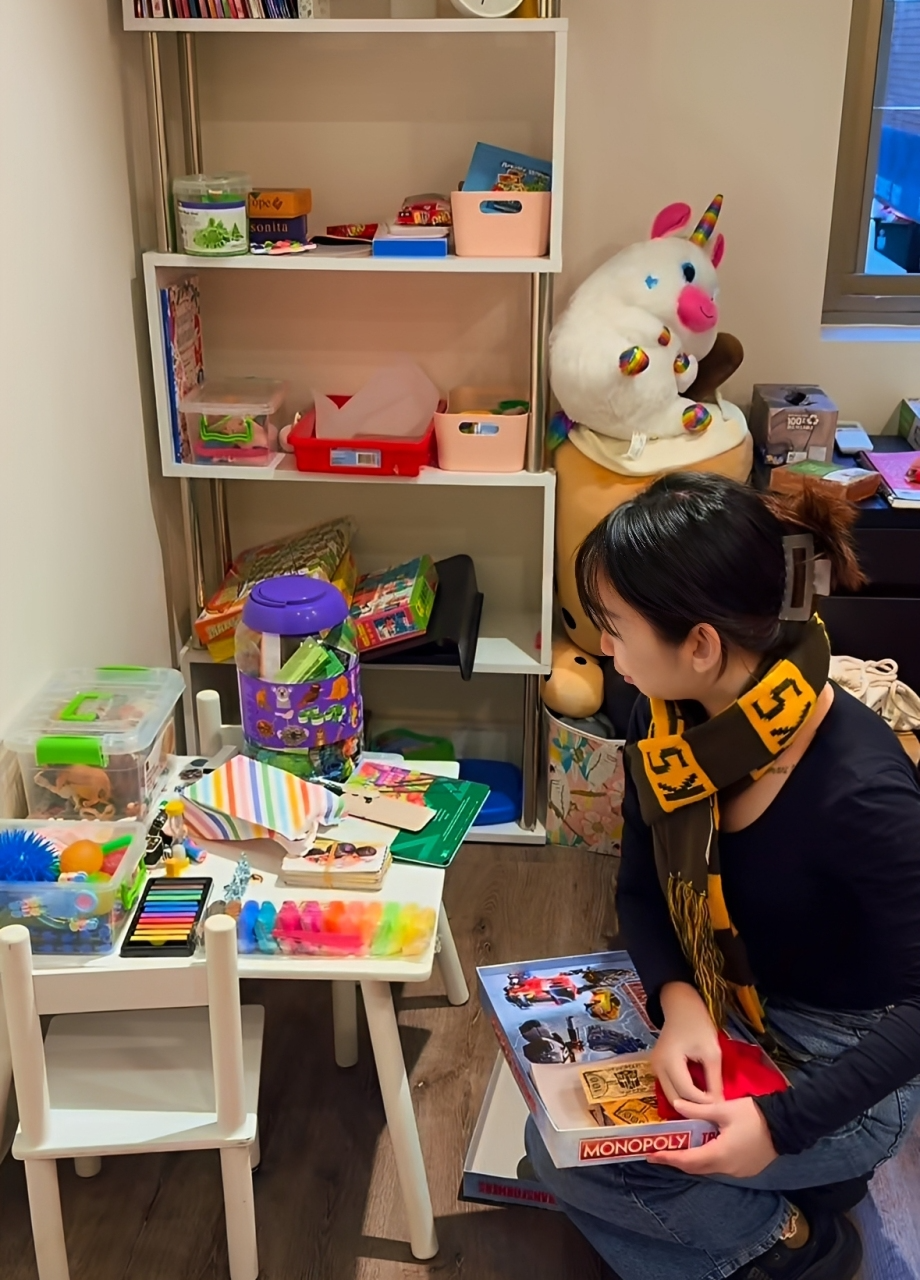
Cynthia quietly bringing order (and a little magic) back to our South Yarra playroom 🎨✨
In other words: play is not a distraction from therapy — it is the therapy.
You may hear the phrase: "Interpret less, play more." For children, connection often comes before insight. A therapist who can enter a child's world through drawing, storytelling, games, or imaginative exploration is often far more effective than one who relies purely on verbal analysis.
Some therapists naturally carry a sense of playfulness and flexibility. Children feel it immediately. And when a child feels safe and engaged, therapy begins.
Your Child Is Part of a System
Children do not exist in isolation. They live within systems — family, school, peer groups. Family therapist Virginia Satir emphasized that individual struggles often reflect broader relational dynamics. A child's anxiety, withdrawal, or behaviour may be deeply connected to the environment around them.
An experienced child therapist, therefore, does more than meet with the child alone. They collaborate with parents. They may liaise with schools. They help create consistency across the child's world. Therapy becomes not just an individual intervention, but a systemic support process.

A child creates a family through play—These animal figures can become symbols in a child’s story: who feels close, who feels distant, and what might need to be kept contained.
Adolescents need connection before correction💗
Adolescents present a different challenge. They are developing autonomy and are often highly sensitive to authority and judgment.
Teenagers do not respond well to feeling "fixed." They respond to being understood. The right therapist for an adolescent is often someone who can tolerate silence, emotional intensity, resistance, and ambivalence — without becoming controlling or dismissive.
Connection comes before correction.
“Growth happens when a person feels deeply accepted.”
Beyond the Résumé
Instead of focusing solely on experience, please consider:
Does your child feel comfortable with this therapist?
Do they want to come back for another session?
Does the therapist have specific experience with children or adolescents?
Are they willing to work collaboratively with parents and schools?
Do they demonstrate flexibility, warmth, and patience?
The most impressive résumé does not guarantee engagement. And without engagement, therapy cannot progress.
Sometimes, it's less about credentials — and more about connection.
The right therapist for your child may not be the most senior, the most academic, or the most decorated. It is the one who can step into your child's world — who knows when to interpret, and when to play — who understands that behaviour carries meaning, and that growth happens in relationship.
